
Wellbeing – something old – something new!

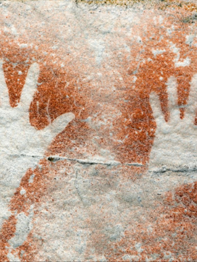
DNA sequencing of a 100-year-old lock of hair has established that Aboriginal Australians have a longer continuous association with the land than any other race of people. "Our Lands, Our Waters, Our people, All Living Things are connected… we long for sparkling, clean waters, health land and people and all living things… Our vision is all people Caring, Sharing, Knowing and respecting the lands, the waters, and all living things (Ngarrindjeri, Nation, 2006, p.5). As Hemming and Rigney (2011) have noted “This vision makes clear the essential link between the well-being of Ngarrindjeri individuals, families, and communities and the place-based consciousness pedagogy through connection to land and waters” (p. 352).
However, there are significant challenges associated with describing and defining well-being - a concept as old as time. All too often the currency of the term is abused and debased although perhaps the fact that it is so widely used is some recognition of how pivotal it is to our very existence.
In a related fashion there are significant challenges in understanding a feature of human relationships which significantly is related to wellbeing - bullying- which of itself is as old as are human relationships. For example in a comprehensive overview of the concept Koo (2007) noted that first recorded description of Korean bullying was to be found in the Chosun dynasty (1392-1910), where it is called Myunsinrae. Apart from the physical and verbal bullying that is documented Koo (2007, p.111) notes that “The most often used form of Myunsinrae was ‘playing invisible coat’ in which assaulters considered victims as someone who did not exist”.
Community has a pivotal role in promoting well-being and addressing bullying (Shute et al, 2011). In support Barbara Rogoff (2007,p.4) observed “I argue that individuals develop as participants in their cultural communities, engaging with each other in shared endeavours and building on cultural practices of prior generations. Understanding these cultural practices, in turn, needs an historical view of the contributions of individuals and generations in dynamic communities”. Silva & Rogoff (2021) have elaborated on the link between bullying and culture in relation to marginalised cultural groups.
Well-being , school bullying, and community are not unrelated but there is an urgency so it is worth considering the following view:
I have been impressed with the urgency of doing. Knowing is not enough; we must apply. Being willing is not enough; we must do. (Leonardo da Vinci)
Please visit our websites : www.caper.com.au
and <bigtalkslittlepeople.com>
References
Hemming, S., & Rigney, D. (2011). Ngarrindjeri Ruwe/Ruwar:Wellbeing through caring for country IN R.H. Shute, P.T., Slee, R. Murray-Harvey, & K.L. Dix, (Eds.) (2011). Mental health and well-being: Educational perspectives. Adelaide: Shannon Research Press.
Ngarrindjeri Nation 2006 Ngarrindjeri Nation Yarluwar-Ruwe Plan: Caring for Ngarrindjeri sea country and culture, prepared by the Ngarrindjeri Tendi, Ngarrindjeri Heritage Committee and Ngarrindjeri Native Title Management Committee, Ngarrindjeri Land and Progress Association, Camp Coorong, Meningie, SA, accessed 5 June 2014
Koo, H. (2007). A Time Line of the Evolution of School Bullying in Differing Social Contexts. Asia Pacific Education Review. 8, No. 1, 107-116.
Rogoff, B (2007). The Cultural Nature of Human development. The General Psychologist, 12 (1) 4-7.
Silva, K. G., & Rogoff, B. (2021). Instructional ribbing as a cultural practice for guiding children. Human Development, 64(4-6), 172-190.


Comments