
School Bullying & Human Rights: A Simple Answer!


The U.N Convention on the Rights of the Child sets out the civil, political, economic, social, health and cultural rights of children. According to the Convention it is a fundamental democratic right for a young person to live and learn in a safe school environment.
‘’Action to combat bullying in schools is undoubtedly a major contributor to the achievement of child rights globally.’’ (Richardson & Hiui,2018, p.3 )
In a globally connected and culturally diverse world, addressing violence and bullying and successfully negotiating violence, diversity and prejudice is critical. There are a number of historical figures whose names are associated with the concept of non-violence as a way of addressing aggression and promoting peace in our society. Arguably, one of the most famous is M.K. Gandhi. As Gandhi noted “ Disobedience to be civil must be sincere. Respectful, restrained, never defiant, must be based upon some well understood principle, must not be capricious and above all, must have no ill-will or hatred behind it’’( Kripalani & Meghani, 1969,p. 51). In further developing his concept of non-violence Gandhi wrote ‘’ I object to violence when it appears to do good, the good is only temporary; the evil it does is permanent’’ ( Kripalani & Meghani, 1969,p. 49). Inherent in Gandhian philosophy is a belief in the essential goodness of a person. As everyone has a conscience if a person is made aware of their mis-behaviour they are capable of seeing reason and behaving differently rendering unnecessary the use of violence to bring about change.
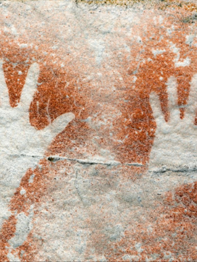
Cohen & Espelage (2020) have provided a comprehensive overview of research relating to violence and bullying prevention, highlighting global concerns regarding the matter. As reviewed by Slee (2017) bullying has been an identifiable feature of most if not all cultures. In the Australian context Indigenous Australians representing one of the oldest cultural groups utilised a Dream Time story to explain how a flightless bird called the Emu actually lost their ability to fly as a result of their bullying behaviour. The Wangkatha, otherwise written Wongatha, Wongi or Wangai, is a language and the identity of eight tribal groups of the south-eastern corner of Western Australia. Their Dream Time story recounts how they Emu lost the ability to fly as a punishment for their bullying of smaller birds. As a result of their bullying behaviour the emus became loud and boastful and although the smaller birds tried to reason with them they would not listen leading to the smaller birds losing their will to sing and the silence of the bush was soon noted by all concerned As a last resort the small birds approached the elder of the tribe who cast a spell on the bullying emus resulting in them losing their ability to fly and bully the smaller birds. There are many such examples of bullying across other cultures. Its existence is reflected in Greek myths, for example the bullying behavior of young Hercules or the victimization of Hephaestus whom the other Gods made fun of because he had a club foot. In fairytales, bullies are represented in stories including ‘Cinderella’ and ‘The Three Little Pigs.’ The Danish author Hans Christian Anderson, in his fairytale ‘The Ugly Duckling’, portrays the duckling as bullied since the day he was hatched, and who flees his barnyard home to live among the wild ducks and geese. After many trials and tribulations he is transformed into a beautiful swan.
Bullying is conceived as a subset of violence or aggressive behaviour; that is, as behaviour that is intentionally harmful, psychologically or physically, to another individual(s) and is associated with a power imbalance. The main international human rights treaty on children's rights is the Convention on the Rights of the Child (CRC). The CRC is the most widely ratified human rights treaty in the world. The only country that has not ratified the CRC is the United States. Broadly speaking human rights are generally described as inter-related interdependent rights inherent to all human beings, regardless of nationality, place of residence, sex, national or ethnic origin, colour, religion, language, or any other status. We are all equally entitled to our human rights without discrimination.
The question which then arises concerns whether school bullying is a violation of human rights which raises the question of just what are human rights. The Australian Human Rights Commission (2013, p.1) notes that ‘’Human rights recognise the inherent value of each person, regardless of background, where we live, what we look like, what we think or what we believe’’. In the same document it is noted that such rights draw upon the significant principles of dignity, equality and mutual respect shared across cultures, religions and philosophies. Article 19 of the CRC addresses the rights of children who are at the receiving end of bullying and harassment: “Parties shall take all appropriate legislative, administrative, social and educational measures to protect the child from all forms of physical or mental violence, injury or abuse, neglect or negligent treatment, maltreatment or exploitation, including sexual abuse, while in the care of parent(s), legal guardian(s) or any other person who has the care of the child’’.
So yes- it would appear that school bullying is a human rights issue.
For further information please visit our websites www.caper.com.au and https://bigtalkslittlepeople.com/
References
Cohen, J. & Espelage , D. (2020). Feeling Safe in School: Bullying and Violence Prevention around the World. Sage Pub. New York.
Kripalani, K., & Meghani, M.(1969) . Readings from Gandhi . Lok-milap Publishers. London.
Richardson , D., Hiu , C.F. (2018) . Developing a Global Indicator on Bullying of School-
aged Children UNICEF Office of Research | Innocenti Working Paper WP-2018-11
Slee, P.T. (2017). School Bullying: Teachers Helping Students Cope. Routledge,
London.


I stumbled across this page while reading a discussion on an Australian tech forum where people were comparing how different websites handle mobile experiences for local users. Since so many of us rely on phones for everyday browsing, I was curious to see how this one was set up. I spent a few minutes looking through the content and found the layout easy to follow, with information grouped into clearly defined sections. Nothing felt overly complicated, and it was simple to understand where to find relevant details. During the discussion, one participant mentioned mafia casino while talking about mobile access options for Aussie players, and it's clear why – the site is built as a Progressive Web App that runs…